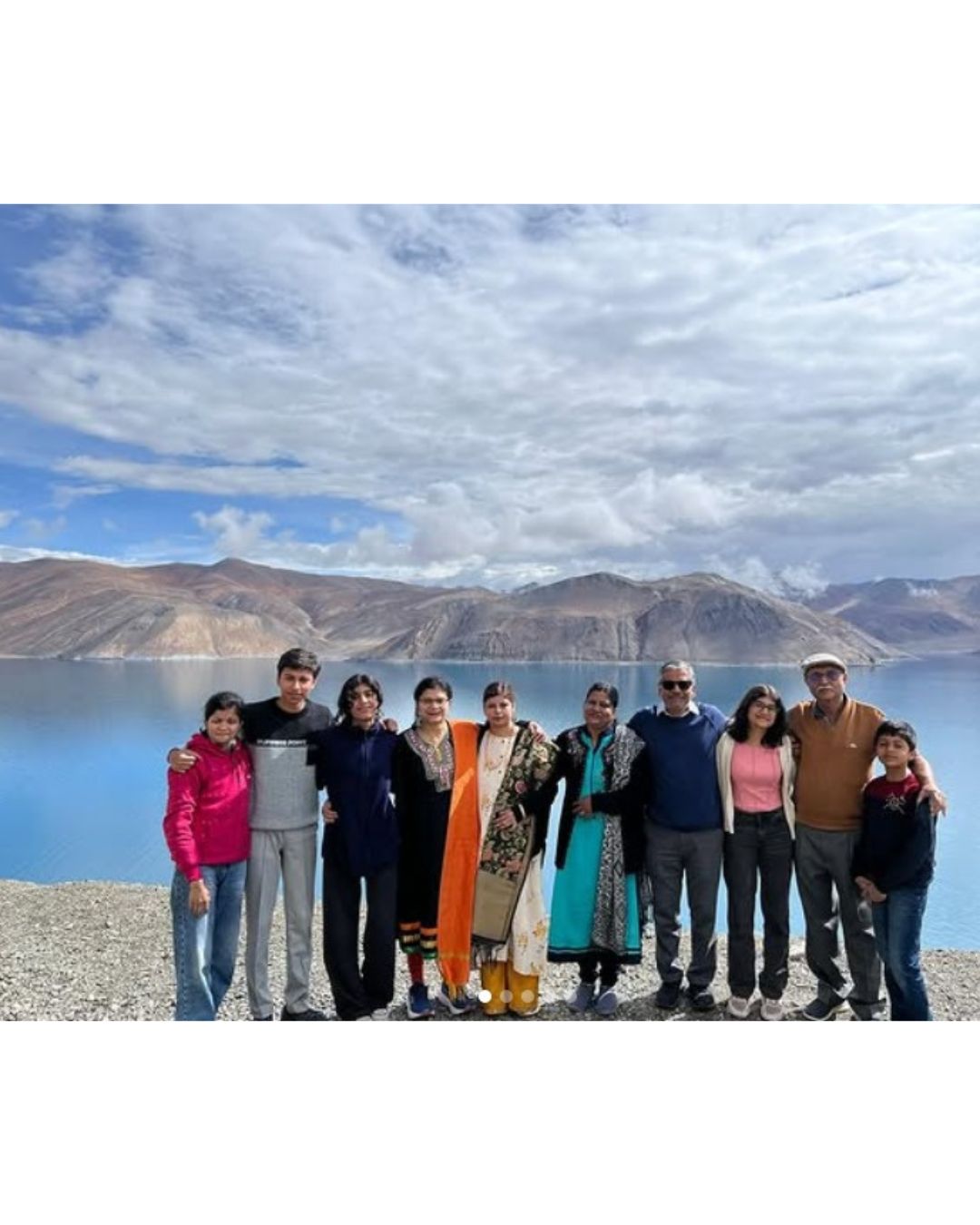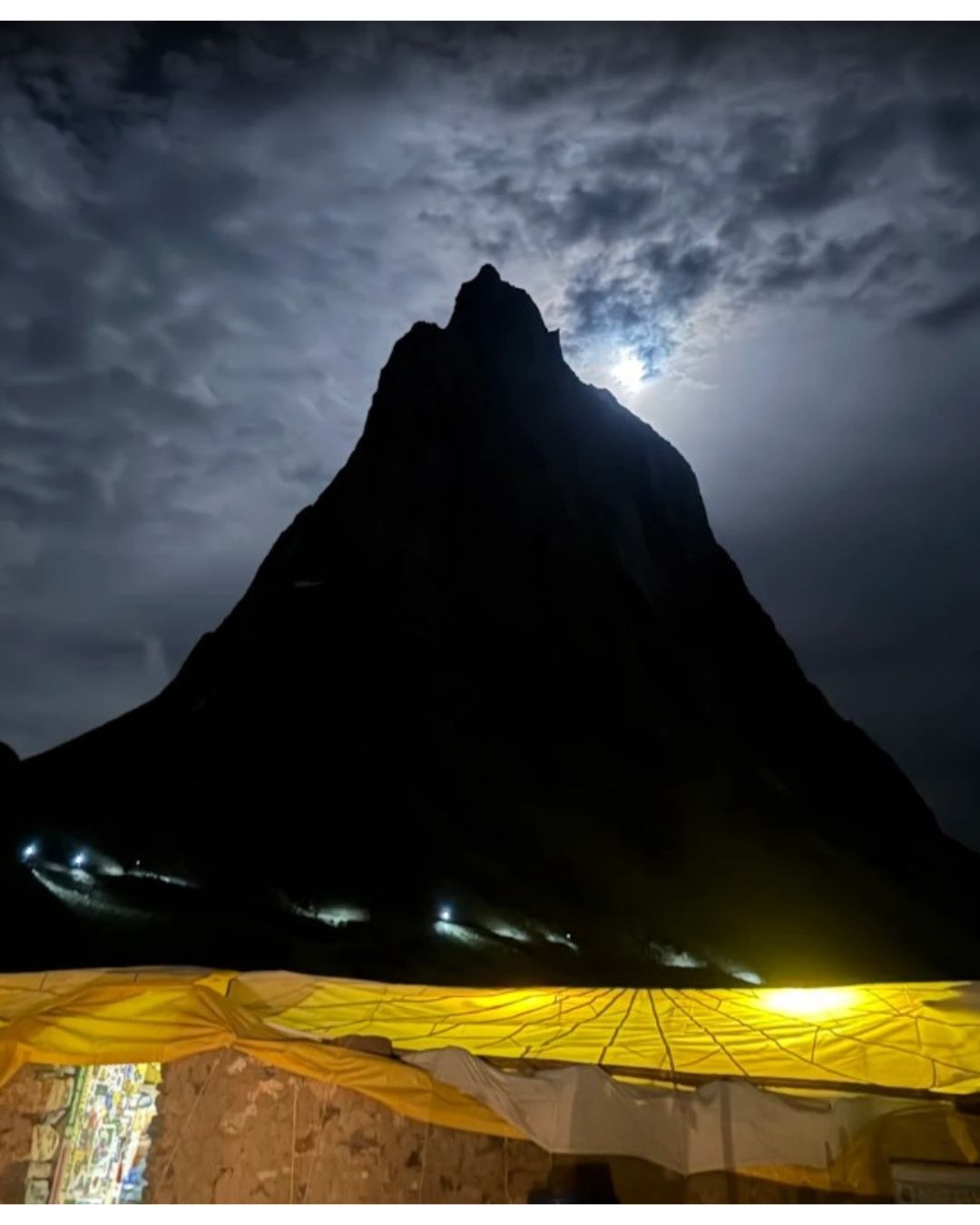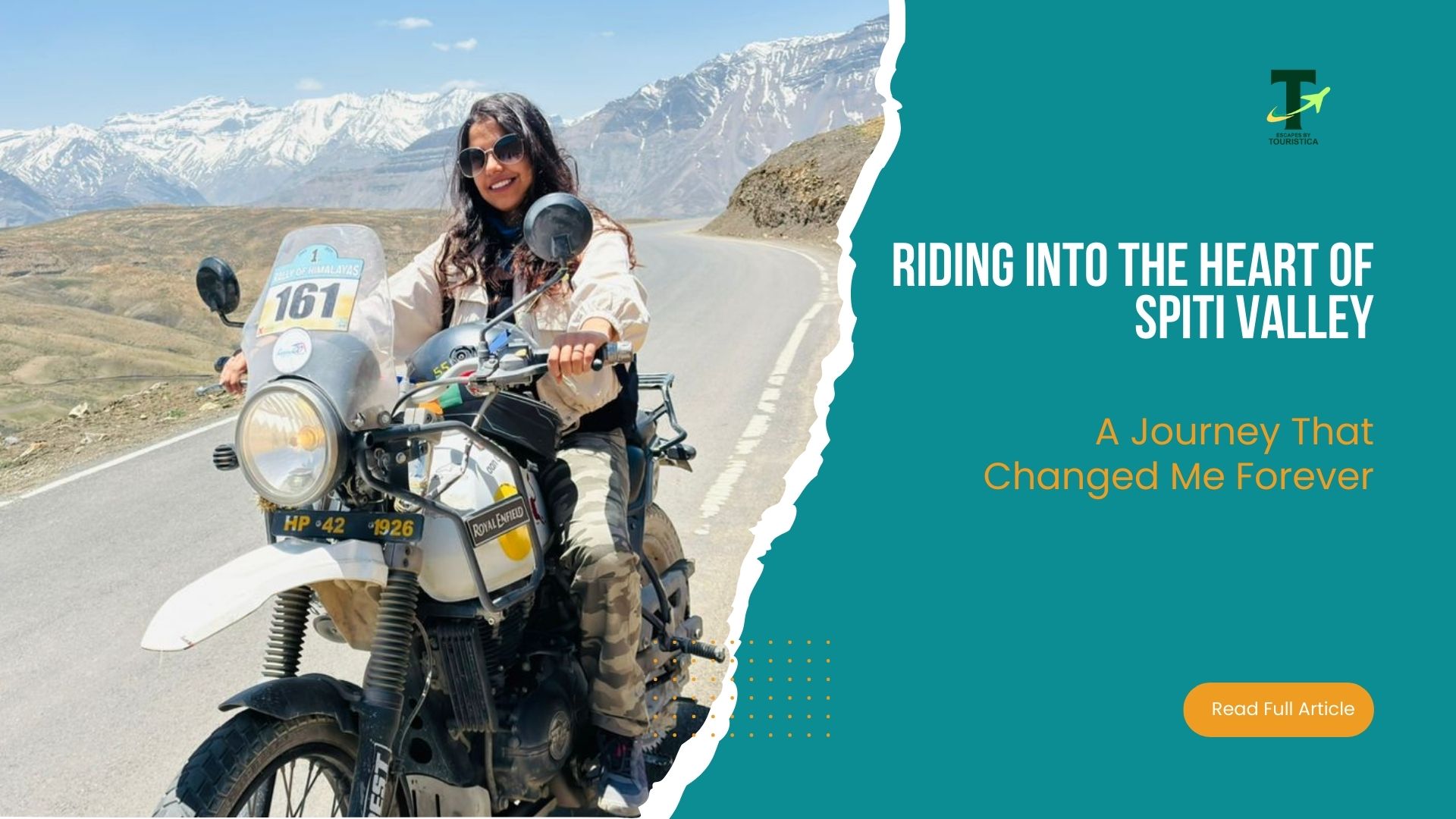
I never thought I’d be the kind of girl who would ride a bike into the Himalayas. Yet one twist of fate placed me on a motorcycle and pushed me toward a land I had never planned to visit—Spiti Valley, the cold desert of Himachal Pradesh that sits between Tibet and India like a forgotten jewel. What began as a spontaneous ride turned into a soul-shaping journey through mountains, monasteries, and myths that felt older than time itself.
Chitkul – The Last Village of India
My road to Spiti began with Chitkul, the last inhabited village near the Indo-Tibetan border. The Baspa River whispered ancient legends, and the snow-clad peaks stood like timeless guardians at the edge of the world. Riding through its winding lanes, I felt the crisp mountain air remind me that here, life moves slowly, untouched by the rush of cities. For anyone beginning a Spiti Valley bike trip, Chitkul sets the tone—it’s where you realize the mountains don’t just stand; they speak.
Kalpa – The Shadow of Kinner Kailash

From Chitkul, the journey led me to Kalpa, a small town known for apple orchards and the sacred Kinner Kailash range. Locals believe this mountain holds the presence of Lord Shiva himself. Every sunset painted the snow peaks in hues of fire, and as I rode beneath their shadow, I felt as though the gods were silently watching. If you are creating your Spiti itinerary, Kalpa is a must-stop—both for its spiritual aura and its breathtaking views of the Himalayas.
Nako – The Enchanted Lake
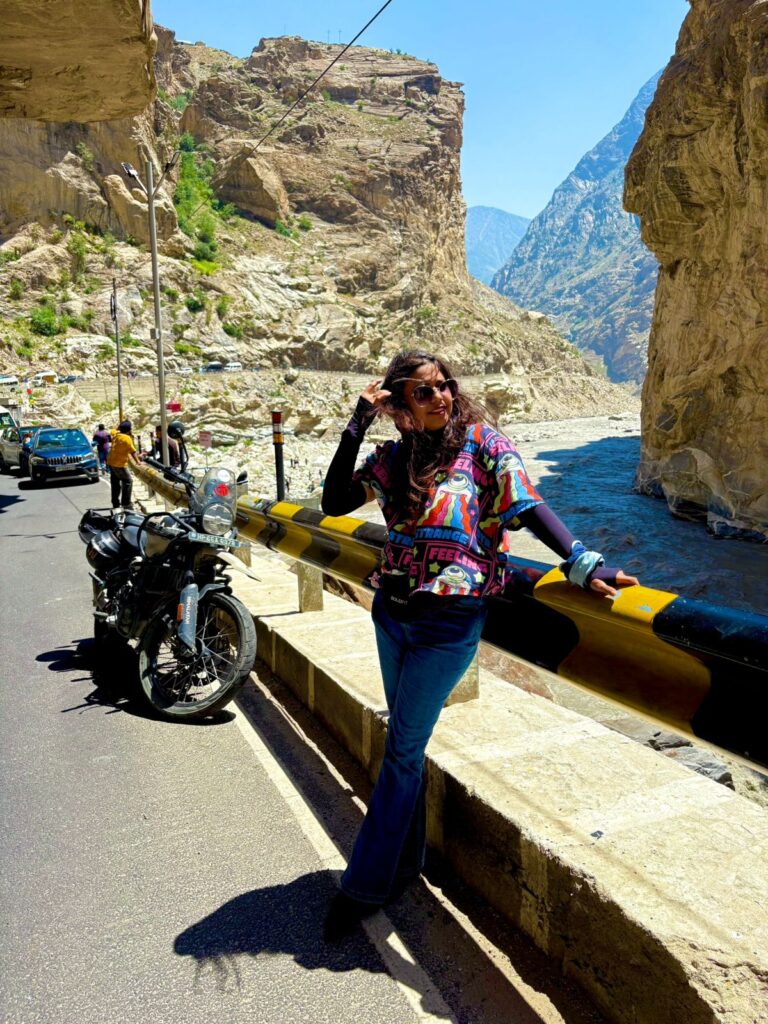
Further ahead lay Nako, a village that seemed more dream than reality. Its sacred Nako Lake reflected the surrounding mountains in perfect stillness, while colorful prayer flags fluttered in the breeze like the voices of unseen monks. Sitting by the banks, I felt like a character in a story written long before me. Nako is not just a stopover; it’s a spiritual pause, where travelers can connect deeply with the serenity of the Himalayas.
Tabo – The Ajanta of the Himalayas
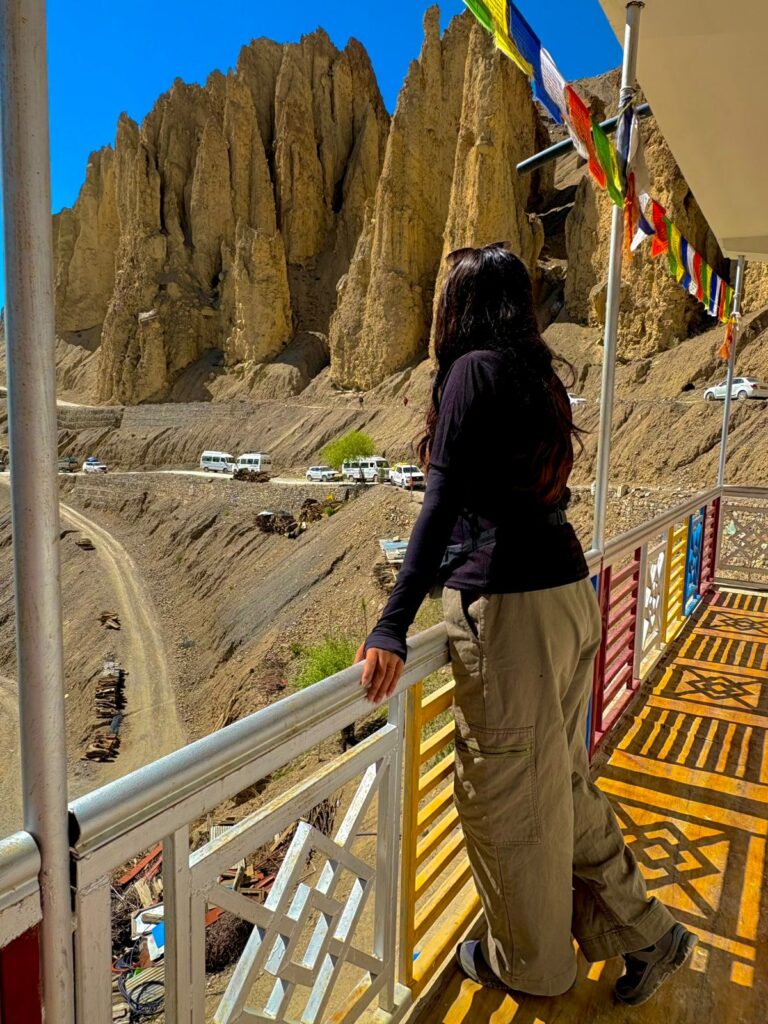
The road wound deeper into the valley until I reached Tabo Monastery, one of the oldest continuously operating Buddhist monasteries in the world, often called the “Ajanta of the Himalayas.” Its walls, over a thousand years old, are covered with priceless murals depicting deities, demons, and protectors. The smell of butter lamps and the silence of meditation halls filled me with awe. If history, art, and spirituality fascinate you, Tabo Monastery is a cornerstone of any Spiti Valley travel guide.
Kaza – The Heart of Spiti
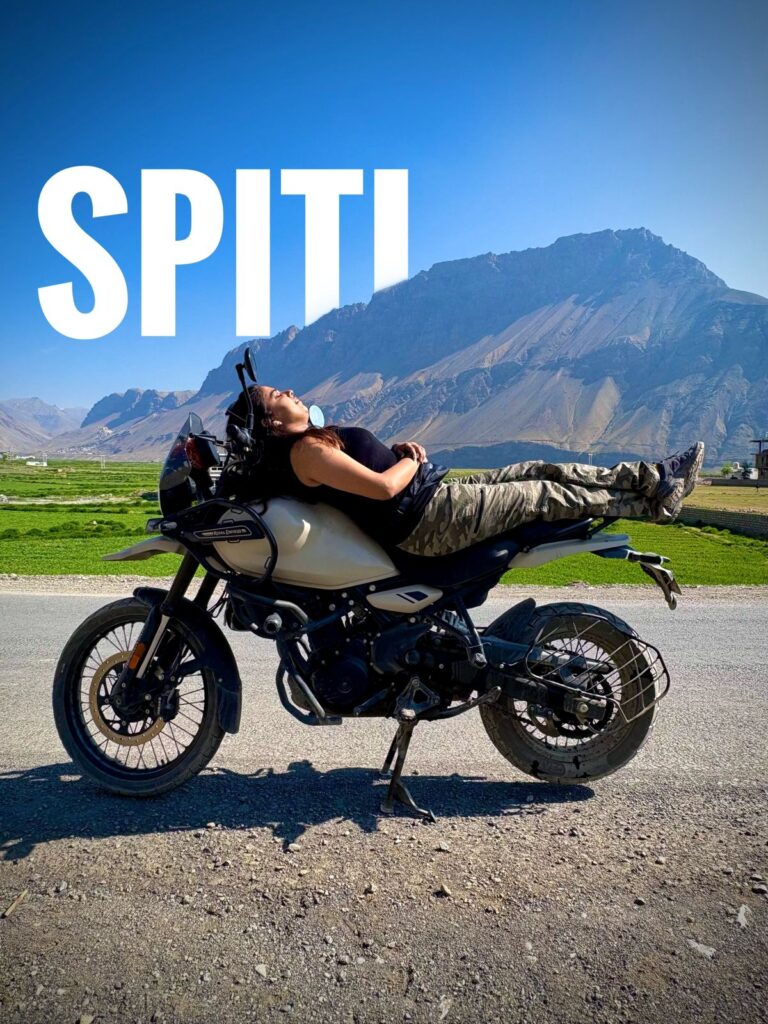
At last, the road opened into Kaza, the administrative capital of Spiti. Nestled in the barren yet majestic landscape, Kaza felt like the pulse of the valley—where culture, adventure, and spirituality meet. Surrounded by ancient monasteries, Kaza is also the gateway to remote gems like Hikkim, Kibber, and Langza. Whether you want to acclimatize, shop for handicrafts, or prepare for treks, Kaza is where every Spiti Valley road trip finds its anchor.
Hikkim & Kibber – Villages in the Clouds
From Kaza, my bike took me higher to Hikkim, home to the highest post office in the world. Dropping a letter here felt surreal—a small piece of myself sent down from the clouds to the rest of the world. A short ride further was Kibber, a charming stone-built village perched above 14,000 ft, surrounded by dramatic ridges. Kibber is also the starting point for spotting the elusive snow leopard in winter, making it one of the top attractions in Spiti tourism.
Chandratal – The Moon Lake
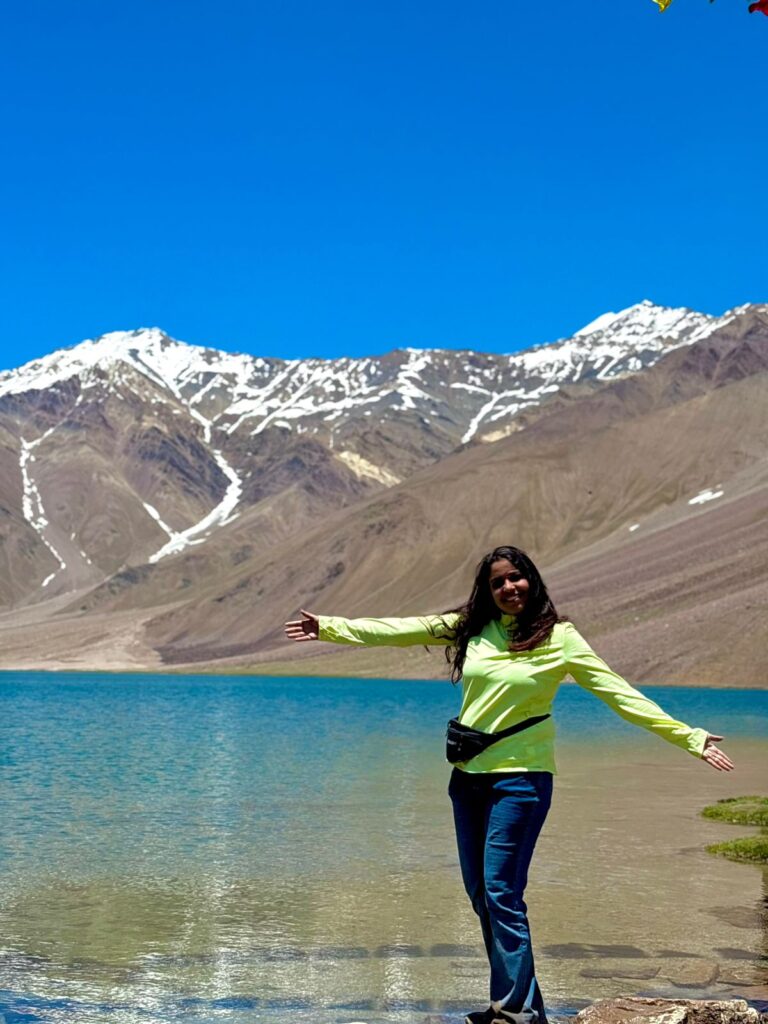
Every journey has a crescendo, and mine was Chandratal Lake—the legendary “Moon Lake.” Shimmering in turquoise brilliance against barren mountains, this high-altitude lake feels like a gateway to heaven itself. Local legends say that Indra’s chariot once descended here, and as I gazed into its otherworldly waters, I almost believed it. Camping near Chandratal under a galaxy of stars is an experience that defines Spiti adventure travel.
Why Spiti Valley Transforms Every Traveler?
By the time I returned, I knew I had been transformed. I had begun as a girl who never imagined riding a motorcycle, and I came back someone who had traced roads that touched the sky. Spiti Valley is more than a destination—it’s a journey through landscapes that blend Hindu and Buddhist myths, through villages that survive in silence and resilience, and through mountains that make you question your limits.
Planning Your Spiti Valley Trip
Best time to visit Spiti: May to October (for bike trips and road travel).
How to reach Spiti: Via Shimla – Kinnaur – Spiti route or the adventurous Manali – Rohtang – Kunzum La route.
Top places to include in your Spiti itinerary: Chitkul, Kalpa, Nako, Tabo Monastery, Kaza, Hikkim, Kibber, Langza, and Chandratal Lake.
Travel style: Spiti can be explored by motorcycle, car, or even guided tours—each offering its own magic.
Final Words
Spiti Valley is not just a road trip—it’s a pilgrimage for the soul. Whether you ride a bike, drive a car, or trek on foot, the valley will change you in ways you cannot predict. And once you’ve gazed into the waters of Chandratal or mailed a letter from Hikkim Post Office, you’ll realize Spiti is not just a place on the map, but a piece of eternity.